
AI in Radiology: Image Quality Leads the Promise, but ROI and Integration Remain Key Barriers
Share this article:
Written by: Jonathan Backer, Quantitative Director

Artificial intelligence (AI) continues to gain attention across radiology and medical imaging, with potential applications ranging from image reconstruction to workflow automation and operational efficiency. However, as imaging departments evaluate and implement AI solutions, questions remain about where these technologies offer the greatest value and whether they are delivering measurable benefits.
At Ensolve Research, we wanted answers to three questions facing imaging leaders: Where do departments see the greatest potential for AI? What are the biggest barriers to adoption? And are existing AI tools delivering on their operational promises?
72 of our imagePRO™ panel members were asked three questions about the potential benefits, limitations, and current performance of AI tools in medical imaging.
Image quality enhancement (44%) is viewed as the most significant opportunity for AI in radiology
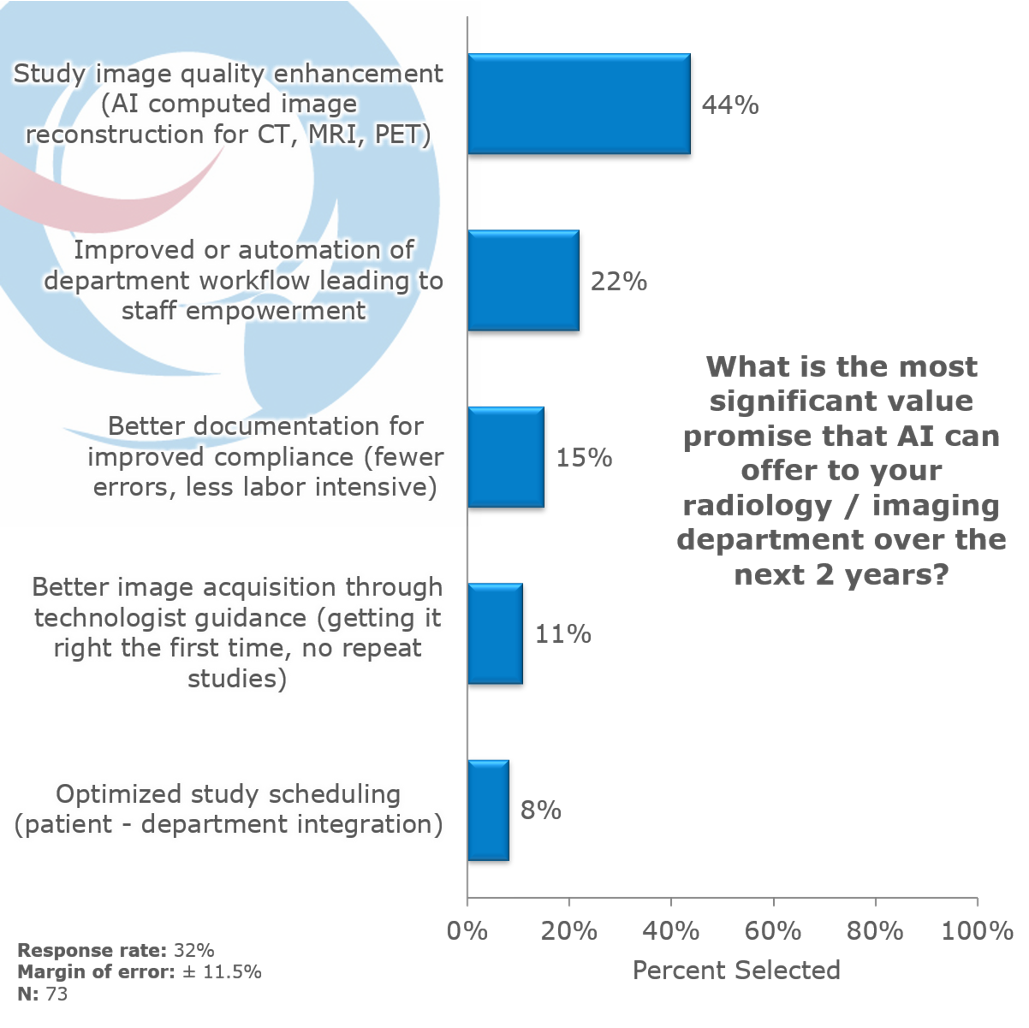
Nearly half of respondents (44%) identify image quality enhancement, including AI-based image reconstruction for CT, MRI, and PET, as the most significant value AI can offer their department over the next two years. Workflow improvement and automation rank second at 22%, followed by better documentation and compliance (15%), improved image acquisition through technologist guidance (11%), and optimized study scheduling (8%).
These findings suggest that imaging leaders see the greatest near-term potential for AI in improving the quality of imaging studies, rather than primarily in administrative or operational applications. For equipment manufacturers and AI developers, image quality enhancement may represent the strongest opportunity to demonstrate value to imaging departments.
Cost and uncertain ROI (38%) represent the leading limitation of AI tools, followed by poor system integration (26%)
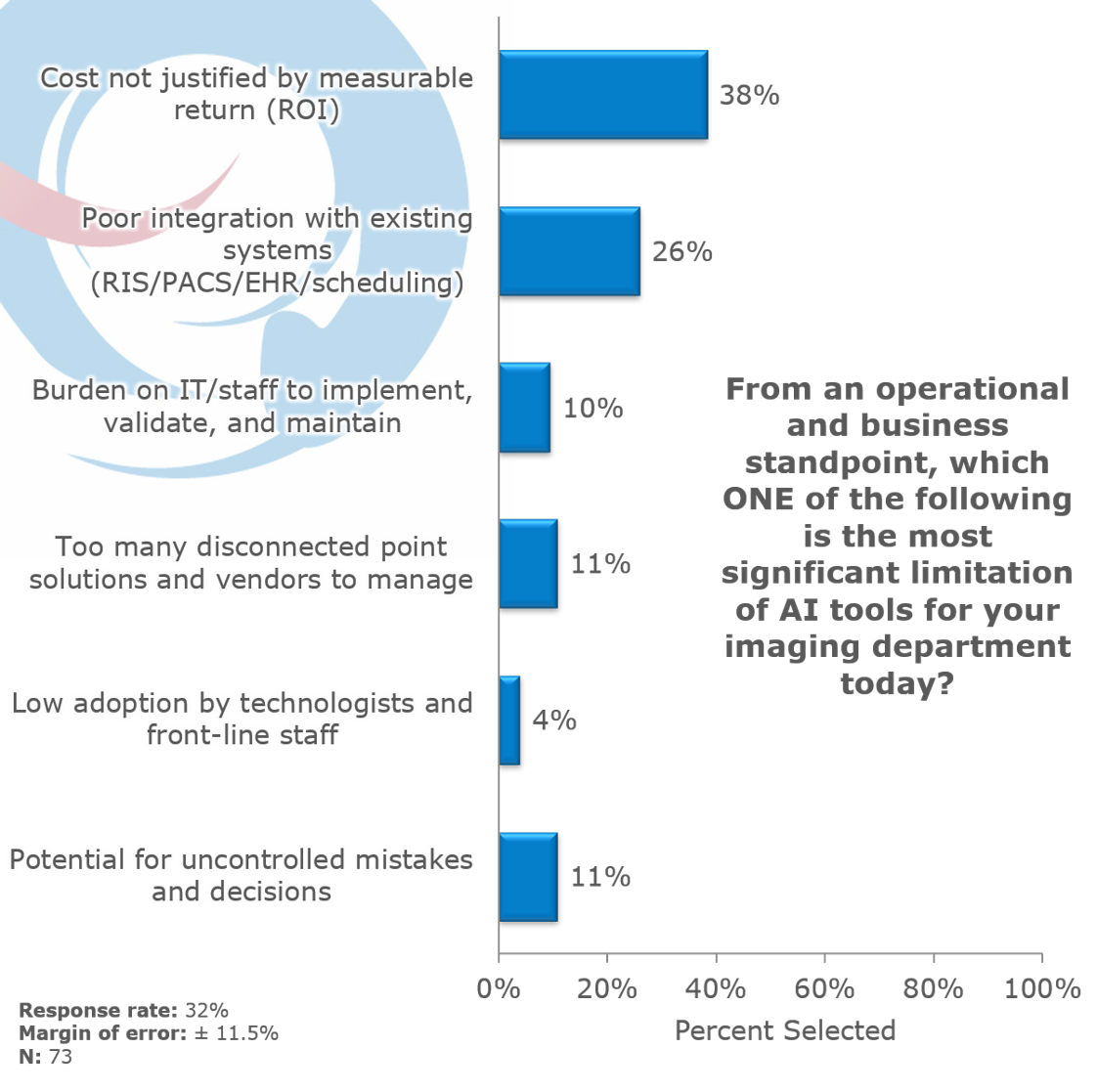
More than a third of respondents (38%) identify costs that are not justified by measurable return on investment (ROI) as the most significant limitation of AI tools in their imaging department. Poor integration with existing systems, including RIS, PACS, EHR, and scheduling platforms, follows at 26%. Other concerns include managing disconnected solutions and vendors (11%), the potential for uncontrolled mistakes (11%), and the burden of implementation and maintenance on IT and staff (10%). Only 4% identify low adoption by technologists and front-line staff as the primary limitation.
Together, these findings suggest that the greatest challenges to AI adoption are financial and technical rather than resistance from end users. For AI vendors, demonstrating measurable ROI and seamless integration with existing infrastructure may be critical to broader adoption.
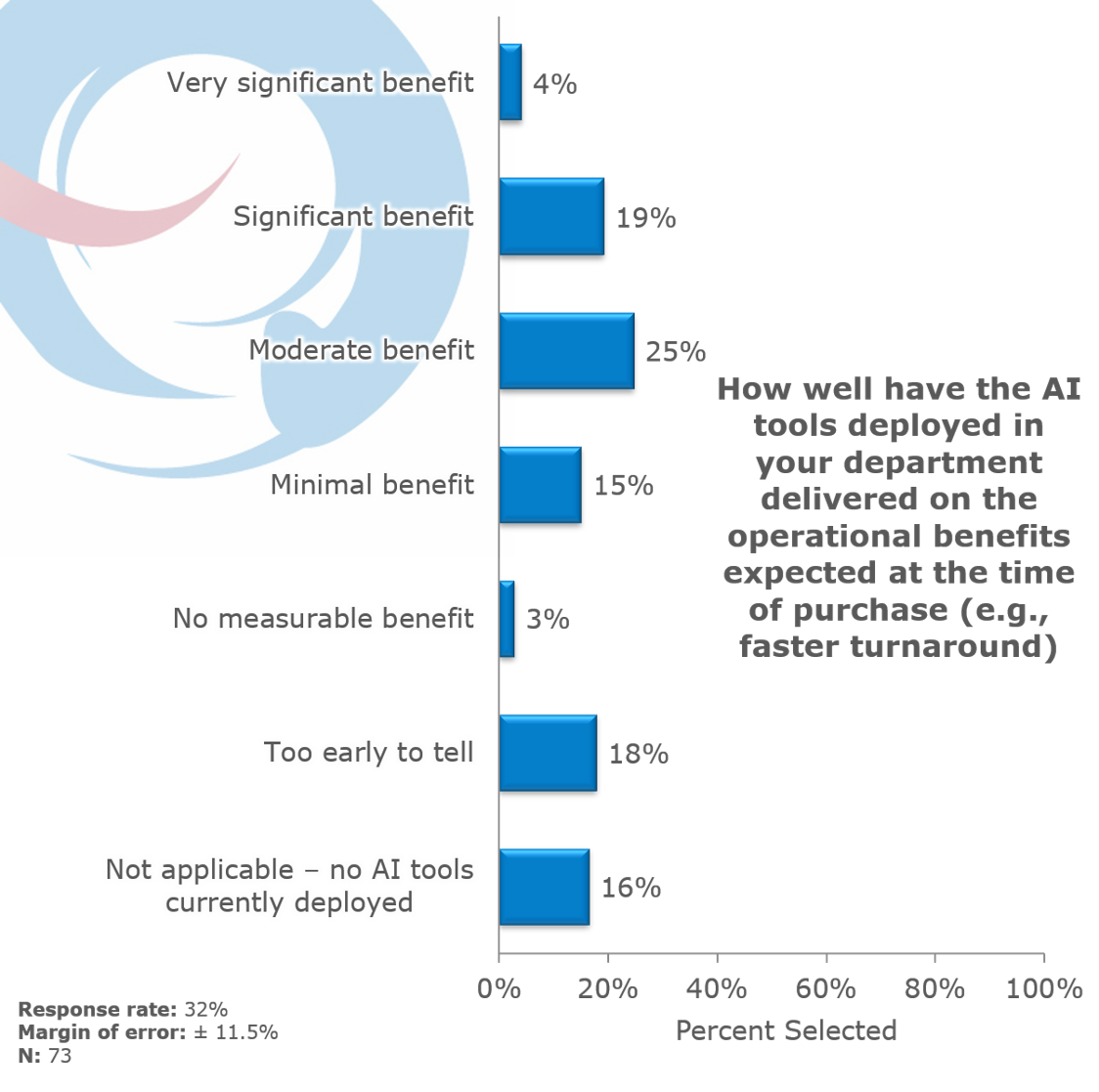
Nearly half (48%) report moderate or greater operational benefits from deployed AI tools, while 18% say it is too early to tell
Among all respondents, 48% report that AI tools have delivered at least moderate operational benefits relative to expectations at the time of purchase, including 25% reporting moderate benefits, 19% significant benefits, and 4% very significant benefits. Another 15% report minimal benefits, while just 3% report no measurable benefits.
However, 18% say it is too early to evaluate performance, and 16% indicate that their department has not yet deployed AI tools. Among respondents able to assess their deployed AI tools, the majority report at least moderate benefits. These results suggest that AI is delivering meaningful operational value for many imaging departments, although the relatively small proportion reporting very significant benefits indicates that the technology may not yet be fully meeting its potential.
The bottom line: AI is demonstrating value in radiology, but proving its financial and operational benefits remains essential to broader adoption
Imaging leaders see the greatest potential in image quality enhancement, while costs, uncertain ROI, and integration challenges continue to limit adoption. Although many departments report meaningful operational benefits from existing AI tools, the findings suggest that future success will depend on solutions that deliver measurable improvements without adding unnecessary complexity. Ensolve Research tracks these evolving priorities through our imagePRO panel of hospital radiology administrators, helping manufacturers and technology developers better understand where imaging departments see value and what barriers remain.
Work with Ensolve Research
Ensolve Research is a MedTech marketing research consultancy specializing in medical imaging, diagnostics, and medical technology. We design and execute primary research that translates market signals into actionable marketing and commercial intelligence.
Our medical imaging research capabilities include:
- Global VOC Studies — Structured interviews and surveys with radiology administrators, imaging directors, clinicians, and purchasing decision-makers
- AI Adoption & Market Opportunity Research — Evaluating adoption trends, unmet needs, purchasing barriers, and opportunities for AI-powered imaging solutions.
- Pricing Research —Conjoint analysis, willingness-to-pay studies, and value assessments to understand pricing expectations and purchasing decisions
- Workflow & Integration Research — Identifying operational inefficiencies, integration challenges, and opportunities for AI-driven workflow improvements.
- Concept & Messaging Optimization — Testing AI product concepts, clinical claims, and value propositions with target buyers.
- Competitive Positioning Research — Assessing market perceptions, competitive differentiation, and factors influencing technology selection.
If your team is developing or commercializing AI-powered imaging solutions in 2027, understanding where imaging leaders see value, what barriers prevent adoption, and how to demonstrate measurable ROI is critical to commercial success.
Ensolve Research designs VOC research to answer these questions before launch.

About the Author — Jonathan Backer
Quantitative Director
Jonathan Backer is the Quantitative Director at Ensolve Research, a healthcare market research firm specializing in Voice of Customer (VOC) research for the medical industry. He supports quantitative research initiatives that help medical device, diagnostics, healthcare IT, and life sciences organizations make informed, data-driven business decisions through rigorous market research methodologies.